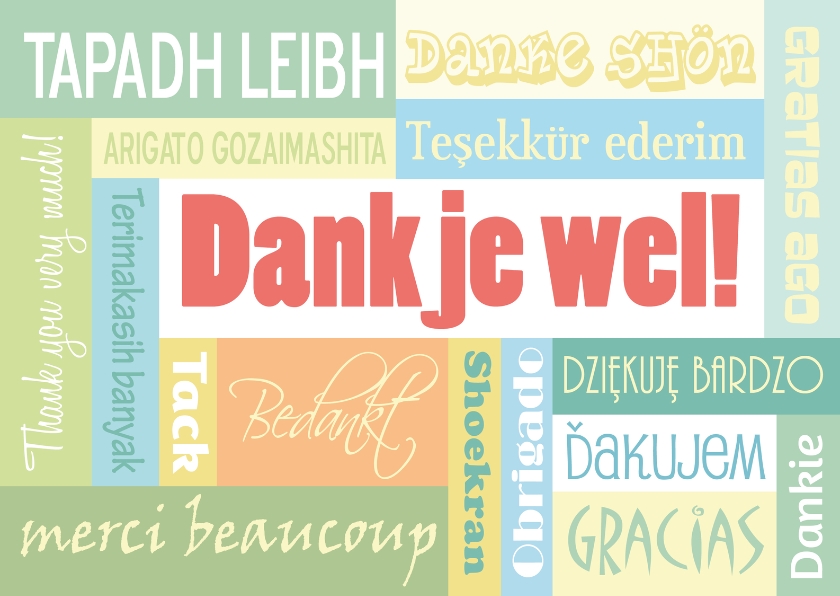
Dank Je Wel Of Dankjewel
Okay, people, gather 'round! Let's talk about something that plagues even seasoned Dutch learners, something that keeps them up at night, tossing and turning in a cheese-induced nightmare: Dank je wel... or is it dankjewel? Dun dun DUN!
Imagine this: you're in Amsterdam, trying to order a stroopwafel (obviously). You finally manage to stammer out "Één stroopwafel, alstublieft!" The vendor, a burly fellow with a mustache that could rival a walrus, hands you the delicious treat. Now comes the moment of truth. Do you say "Dank je wel," sounding like a proper, albeit slightly confused, tourist? Or do you go full Dutch and blur it all together into "Dankjewel," hoping you don't sound like you're gargling peanut butter?
This, my friends, is the great Dutch 'thank you' conundrum. And trust me, it’s more complicated than trying to navigate a Dutch roundabout on a bicycle after a few jenever.
Must Read
The Grammar Police Have Entered the Chat
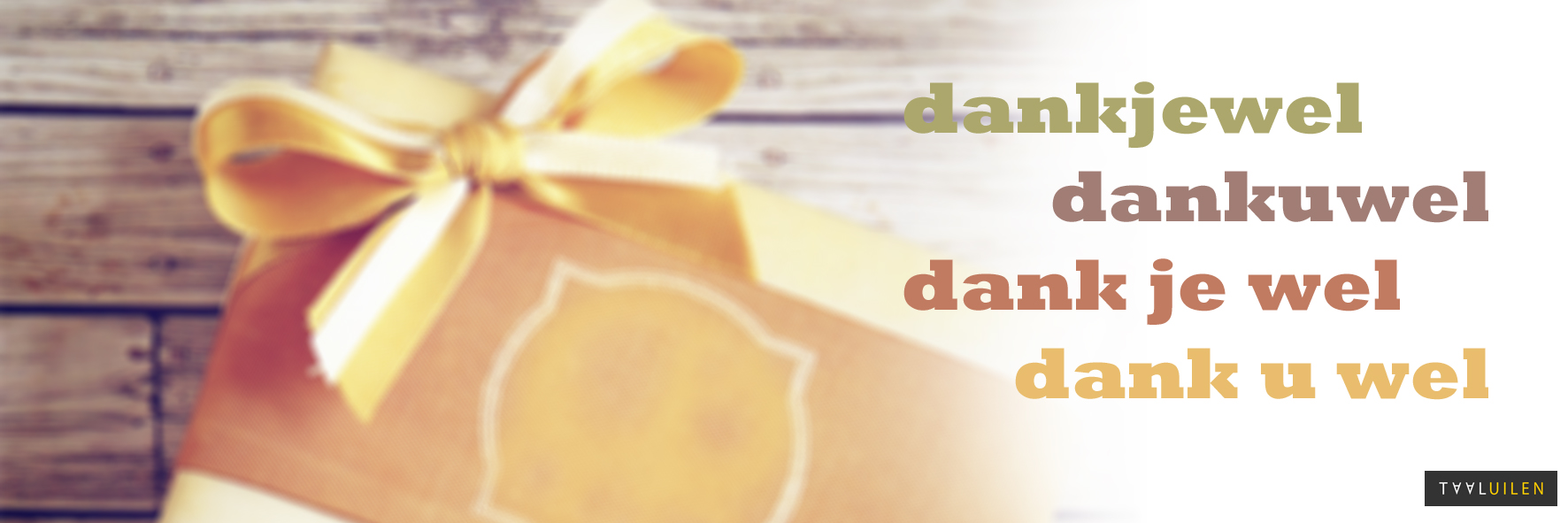
Let's get the boring (but necessary) bit out of the way first. Grammar, the buzzkill of every language learner's party. Officially, both are correct. Yes, you read that right. They both float in the Dutch linguistic sea, bobbing along like little wooden shoes.
- Dank je wel: This literally translates to "Thank you well." It's the more traditional, slightly more formal way of saying thank you. Think of it as the Queen's English version of "thank you." Use this when you want to be polite, maybe thanking your boss for not firing you after you accidentally set off the office fire alarm trying to microwave a herring.
- Dankjewel: This is the more common, everyday version. It's like the Dutch equivalent of saying "thanks." Perfect for thanking the stroopwafel vendor, the bus driver, or the random person who helps you untangle your bike from a canal (it happens!).
So, why the confusion? Well, Dutch has a penchant for squishing words together. They're like linguistic hoarders, wanting to cram as many syllables as possible into a single unit. It's all about efficiency, people! Time is money, and in the Netherlands, that time could be better spent cycling, eating cheese, or complaining about the weather.
Breaking it down, Dutch-style:
Let's dissect these phrases like we're performing a grammatical autopsy. It's gruesome, but necessary!
- Dank: This means "thanks" or "gratitude." Pretty straightforward, right? Don't overthink it.
- Je: This means "you." Again, simple enough. No need to bring in quantum physics.
- Wel: This is where things get a little murky. "Wel" doesn't have a direct translation in English. It's kind of like an intensifier, adding emphasis to the "thank you." Think of it as the Dutch equivalent of saying "thank you very much," but without the "very much." Convoluted? Absolutely. Typically Dutch? You betcha.
When to Dank, and When to Dankjewel: A Practical Guide
Okay, enough with the grammatical mumbo jumbo. Let's get down to the nitty-gritty. When should you use which one? Here's my highly scientific, totally foolproof guide (disclaimer: may not be entirely foolproof).
- Formal Situations: When in doubt, go with "Dank je wel." Meeting the Dutch Prime Minister? "Dank je wel, meneer Rutte!" Your future in-laws? "Dank je wel!" Accidentally spilling coffee on a Rembrandt? "Dank je wel...for the opportunity to ruin a priceless masterpiece!" (Okay, maybe run away after that last one.)
- Informal Situations: "Dankjewel" is your go-to for everyday interactions. Buying groceries? Dankjewel! Getting your bike fixed? Dankjewel! Successfully navigating a Dutch train schedule? Dankjewel, universe, for not completely destroying my sanity!
- Pro-Tip: Listen to how the locals say it. Mimicry is your best friend when learning a new language. If everyone's saying "Dankjewel" like a rapid-fire machine gun, hop on the bandwagon! If they're all enunciating each word with the precision of a Swiss watchmaker, follow suit.
The Ultimate Dutch 'Thank You' Power Move
Want to really impress the Dutchies with your gratitude? Here's the secret weapon: combine "Dankjewel" with a head nod and a slight bow. This shows that you not only appreciate their kindness but also understand the subtle nuances of Dutch culture. They'll be so impressed; they might even offer you a free block of cheese! (Okay, probably not, but it's nice to dream.)
But here's the real kicker: adding a personal touch. Instead of just saying "Dankjewel," try "Dankjewel voor de hulp!" (Thank you for the help!) or "Dankjewel voor de lekkere stroopwafel!" (Thank you for the delicious stroopwafel!). Show them you're paying attention and genuinely appreciate their service. It's all about building connections, people. Even if that connection is based on a shared love of sugary waffles.
Common Mistakes to Avoid (Because We've All Been There)
Learning a new language is like navigating a minefield. One wrong step, and BOOM! You've just said something completely ridiculous. Here are a few common "dankjewel" related mistakes to avoid:
- Saying "Dank u wel": "U" is the formal "you" in Dutch. While technically correct, it's rarely used in everyday conversation. Unless you're addressing the King or Queen, stick with "je."
- Confusing "Dankjewel" with "Alstublieft": "Alstublieft" means "please" or "here you go." Don't accidentally thank someone before they've even given you anything. Awkward!
- Over-thanking: While it's good to be polite, excessive thankfulness can come across as insincere. One "Dankjewel" is usually sufficient. Unless, of course, someone saves your life. Then, by all means, thank them profusely!
Conclusion: Don't Stress, Just Dank!
So, there you have it. The definitive (maybe) guide to "Dank je wel" vs. "Dankjewel." The bottom line is this: don't overthink it! Both are perfectly acceptable ways to express your gratitude in Dutch. Just choose the one that feels most natural to you and go with it. And remember, a little bit of effort goes a long way. Even if you butcher the pronunciation, the Dutch will appreciate that you're trying. They're a pretty tolerant bunch, especially when it comes to foreigners attempting to speak their language (probably because they know how difficult it is!).
So, go forth and dank with confidence! And if all else fails, just smile and nod. It works in almost any situation. Trust me, I'm practically fluent... in nodding.
Now, if you'll excuse me, I'm going to go practice my head-nodding technique. Dankjewel for reading!