Is Het Data Of Datums
Okay, okay, settle in folks! Grab your stroopwafels, because we're about to dive headfirst into a linguistic kerfuffle that's plagued Dutch-speakers (and confused visitors!) for ages. We’re talking, of course, about the Great Data Dilemma: Is it 'het data' or 'datums'? It's a question that's launched a thousand furious forum debates and left many a bewildered international colleague scratching their heads. Seriously, I’ve seen wars fought over less. (Okay, maybe not wars, but definitely some passive-aggressive email exchanges).
Picture this: You're presenting a brilliant PowerPoint, filled with charts and graphs that would make even Einstein jealous. You’re about to impress everyone with your insightful analysis of… well, data! And then, BAM! You hesitate. Do you say "Het data toont aan..." or "De datums tonen aan..."? Your carefully crafted presentation suddenly feels like a wobbly tower of Jenga blocks, ready to come crashing down. Trust me, I've been there. It's not pretty.
The Official Stance (According to People in Suits)
Let’s start with what the grammar gurus say. The 'Grote Van Dale', the Dutch dictionary equivalent of the Encyclopedia Britannica if the Encyclopedia Britannica had a wicked sense of humour (it doesn't, unfortunately), defines "data" as plural in origin. It comes from Latin, where "datum" is singular (meaning 'a piece of information') and "data" is plural ('multiple pieces of information'). So, technically, "data" should be treated as plural.
Must Read
Therefore, the "correct" form is usually considered to be:
- De data (with a plural verb)
- Datums (less common, but still technically valid)
Emphasis on usually. Because, as any seasoned Dutch language adventurer will tell you, things are rarely that simple. Welcome to the land of exceptions, ambiguities, and grammatical rule-bending! Think of it as the grammatical equivalent of Amsterdam’s red light district: a place where the rules are… flexible, shall we say?
The Plot Thickens: When "Het Data" Reared its Head
Here's where things get interesting. Over time, "data" started creeping into common usage as a singular, uncountable noun. This is largely thanks to the influence of English (blame the Americans!), where "data" is often used in a singular context, even though, grammatically it should be plural. Think of phrases like "Data is the new oil" - you would not say "Datas are the new oil."
So, what happened? Well, people started saying "Het data" instead of "De data". They reasoned (or perhaps mis-reasoned) that since "data" refers to a collection of information as a whole, it should be treated as a singular entity, like "het water" (the water) or "het zand" (the sand). And, like a catchy tune that you can't get out of your head, "Het data" spread like wildfire.
You might hear sentences like:
- Het data toont een duidelijke stijging. (The data shows a clear increase.)
- Het data is belangrijk voor onze besluitvorming. (The data is important for our decision-making.)
Now, traditionalists will clutch their pearls and cry foul. They'll tell you that this is grammatical sacrilege, a sign of the apocalypse, the downfall of Western Civilization as we know it! (Okay, maybe I'm exaggerating a little… but you get the picture). They'll point to the Latin roots and the official dictionary definitions. But here’s the thing: language evolves.
So, Which One Should You Use?
Ah, the million-dollar question! The answer, as with most things in life, is "it depends."

When to Embrace Your Inner Grammar Nazi (and say De Data)
- Formal writing: If you're writing a serious report for your boss or submitting a scholarly article to a prestigious journal, stick with "de data" or "datums." It’s safer, it’s proper, and it will keep the grammar police off your back.
- When referring to distinct data points: If you're talking about specific sets of data, "de data" makes more sense. For example, "De data van vorig jaar verschilt sterk van de data van dit jaar." (The data from last year differs greatly from the data from this year).
When to Let Loose and Embrace the "Het Data" Rebellion
- Informal settings: If you're chatting with colleagues around the coffee machine, presenting to a less formal audience, or just generally trying to avoid sounding like a robot, "het data" might be acceptable.
- When referring to data as a collective whole: If you're thinking of data as one big blob of information, "het data" can feel more natural. For example, "Het data is cruciaal voor ons begrip van de markt." (The data is crucial for our understanding of the market.)
- When you're just feeling rebellious: Hey, sometimes you just want to break the rules! (But be prepared for potential side-eye from the grammar sticklers).
The "Datums" Option: The Forgotten Sibling
Let's not forget about "datums"! It's the plural form that’s often overlooked and underappreciated. It's like the middle child of the "data" family – always there, but never getting the spotlight. "Datums" is perfectly acceptable, especially when referring to specific pieces of information. For example, "De datums in dit rapport zijn zorgvuldig gecontroleerd." (The data in this report have been carefully checked.)
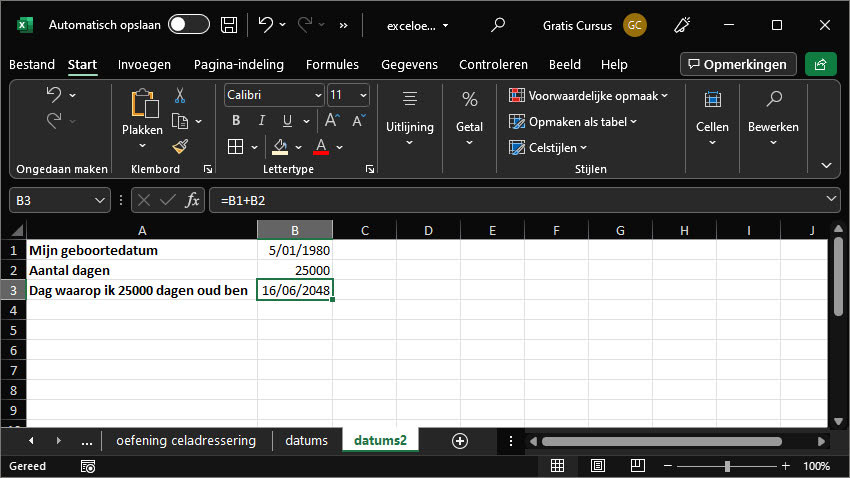
However, "datums" also has another meaning in Dutch: dates (as in calendar dates). This can lead to some hilarious misunderstandings. Imagine trying to explain the importance of "analysing datums" to a potential client, and they think you're obsessed with studying romantic encounters! Awkward!
My Humble Advice (Take it or Leave it)
Honestly? Just pick one and stick with it. Consistency is key. And be prepared to defend your choice to anyone who dares question you. Arm yourself with knowledge, confidence, and maybe a few well-placed Dutch insults. (Just kidding!… Mostly).
But seriously, don't get too hung up on it. Language is a living, breathing thing, constantly evolving and adapting. What was considered grammatically incorrect yesterday might be perfectly acceptable tomorrow. And let's be honest, there are far more important things to worry about in life than whether you use "het data" or "de data". Like, for example, whether you have enough stroopwafels to get you through the day.
So, go forth and conquer the world of data! Just remember to double-check your spelling, proofread your presentations, and maybe keep a grammar guide handy… just in case. And if all else fails, blame it on the English. They started it!
Disclaimer: The author is not a professional linguist, just a humble storyteller with a love for the Dutch language and a healthy dose of sarcasm. Grammatical accuracy is not guaranteed. Reader discretion is advised. Side effects may include confusion, amusement, and an insatiable craving for stroopwafels.