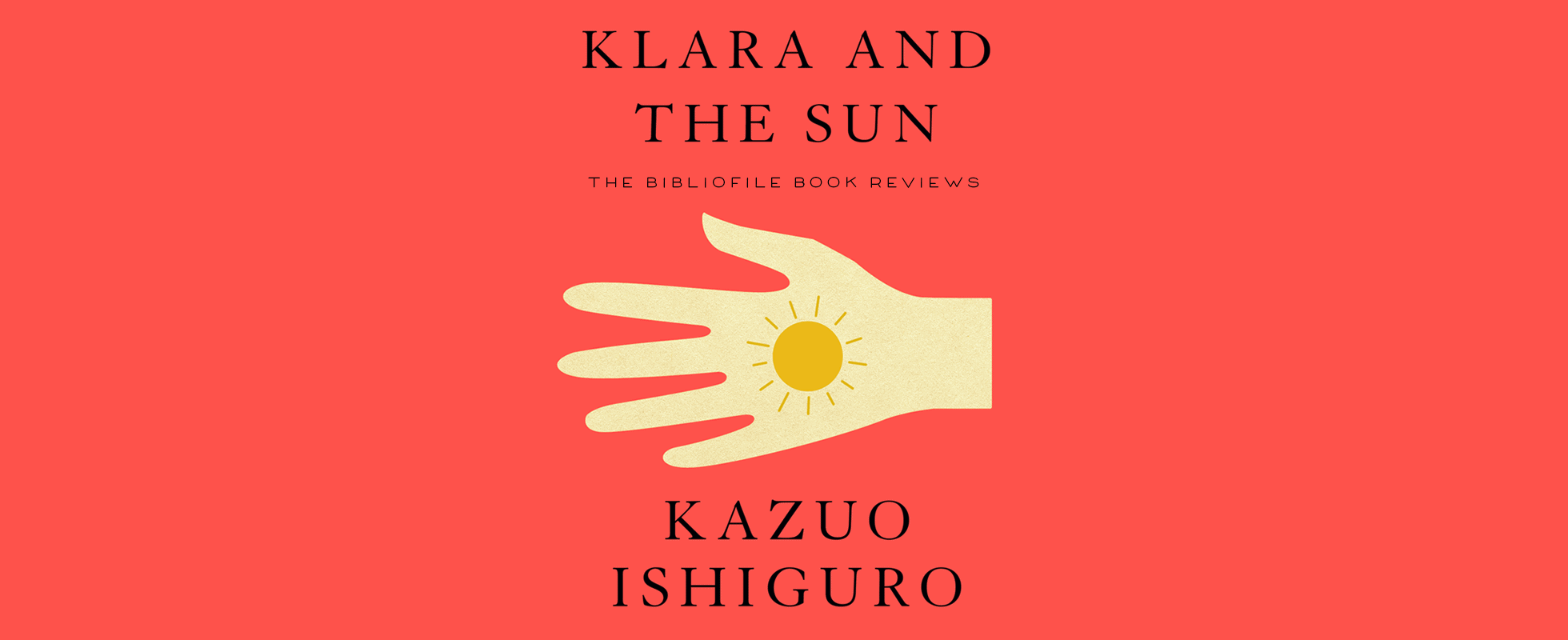
Klara And The Sun Plot

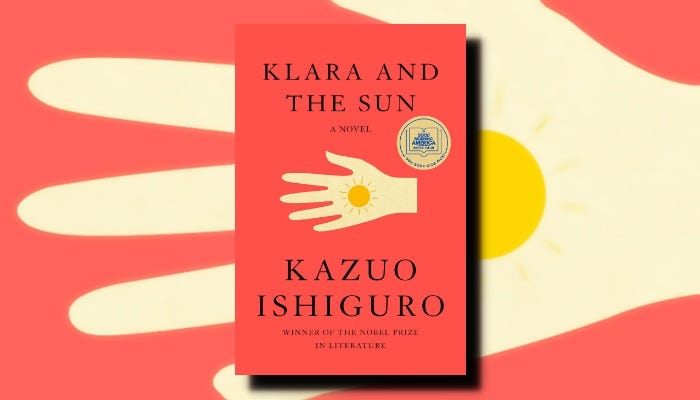
Okay, so picture this: you're chilling in a trendy café, latte in hand (oat milk, obviously, we're civilized!), and I'm about to tell you about a book. But not just any book. We're talking about Klara and the Sun by Kazuo Ishiguro, the dude who gave us Never Let Me Go, which, let's be honest, emotionally scarred a whole generation. So, you know, buckle up, buttercup, because this one's gonna be a ride.
Basically, imagine a futuristic world where some kids are, shall we say, enhanced. And by "enhanced," I mean there's a chance they're genetically engineered for super-smarts and stuff. It's all very hush-hush and vaguely unsettling, like finding out your barista secretly judges your latte art choices.
Our main squeeze is Klara, an AF – an Artificial Friend. Think of her as a super-advanced, solar-powered robot companion. Seriously, she loves the sun. Like, bordering on obsessive. If the sun was a boy band, Klara would be the ultimate stan.
Must Read
Klara's Big Adventure (and Mild Obsession with Solar Panels)
Klara's chilling in the store, waiting to be chosen. It's like a robot puppy adoption center, only instead of squeaking toys, they're probably analyzing atmospheric conditions or calculating optimal sun-bathing angles. She's watching the street, absorbing everything with her super-sensitive sensors, and basically forming opinions about the human race. Which, spoiler alert, are probably mixed at best.
Then, boom! Enter Josie. A young girl who's… well, let's just say she's not having the best time. She's sick. The details are a bit murky (because Ishiguro loves to keep things vague and atmospheric, like a British weather forecast), but it's definitely something serious and connected to her enhanced status. Think of it as the ultimate downside of being really, really ridiculously good at trigonometry.

Josie's Pick: A Sun-Worshipping Robot Friend
Josie chooses Klara! Huzzah! Klara is overjoyed, mostly because she's now closer to the sun. I swear, if she could build a solar panel shrine, she totally would.
So, Klara moves into Josie’s house, which is located in the middle of nowhere. We're talking fields for days, and that's it. No Wi-Fi, questionable cell service, and the only entertainment seems to be staring at the sun. Klara, of course, is in heaven. Josie, not so much.
- Klara's Mission: To heal Josie. This is her prime directive, folks. She believes the sun has magical healing powers. (Don't tell her about SPF, she'll short-circuit.)
- Josie's Situation: Sick, possibly dying, and dealing with the existential dread of being a genetically enhanced teenager. Puberty's hard enough without the looming threat of… well, you know.
- The Mother: A fascinatingly complex character. She's desperate to save Josie, but she's also hiding a lot. Think "ice queen" meets "helicopter mom" with a dash of "secret science project."
Plot Thickens: More Drama Than a Reality TV Show
Things get weird. As they always do in Ishiguro novels. Klara starts to believe that the sun can cure Josie if she just promises to be good. This involves a lot of staring at the horizon and making solemn vows, which is honestly a little bit adorable and a little bit unsettling. Think of it as robot prayer meets sunshine worship.

Then there's Rick, Josie's childhood friend. He's not "enhanced," which puts him at a distinct disadvantage in this weird, futuristic society. He's basically the underdog, and Klara, being the observant robot she is, picks up on the tension between Josie and Rick due to her declining health and enhanced status.
The Mother, in her desperate attempt to ensure Josie's survival, has a totally normal and not-at-all-creepy idea. She wants Klara to "become" Josie. Basically, she wants Klara to learn Josie's personality, memories, and quirks so well that she can… well, you can probably guess where this is going. It's like a robot replacement program, but with much higher stakes.

The Murky Waters of Memory and Identity
This is where the book gets really interesting. Klara starts observing Josie with laser-like focus, trying to capture her essence. She's like a robotic anthropologist, studying Josie's every move, every facial expression, every whispered word. It's both fascinating and deeply disturbing. Are we replaceable? Can our memories truly define us? These are the kinds of questions Ishiguro loves to dangle in front of you like a shiny, existential carrot.
The plot thickens like a bad roux. There are secret meetings, shady deals, and a whole lot of whispered conversations. The world around Josie is crumbling and Klara is desperate to do anything to stop it. Klara even sabotages a machine she believes is blocking the sun's rays. Seriously, she goes full eco-warrior robot. I almost expected her to start chaining herself to trees (or, in this case, solar panels).
The Ending (Don't Worry, No Spoilers... Mostly)
I'm not going to give away the ending, because where's the fun in that? But I will say this: it's classic Ishiguro. It's bittersweet, melancholic, and leaves you with more questions than answers. You'll be pondering the meaning of life, the nature of consciousness, and whether or not robots deserve equal rights. And maybe, just maybe, you'll find yourself staring at the sun a little bit longer than usual.

Basically, after her services are no longer needed, Klara is moved to a "yard" for obsolete Artificial Friends. This is basically a robot retirement home. The "yard" is a sad, lonely place where the AFs spend their days remembering and reflecting. The Operator, an older woman, tends to the AFs in the yard.
She remembers Josie fondly and holds onto the belief that she helped her in some way. It's a quiet, reflective ending that underscores the themes of memory, sacrifice, and the search for meaning in a rapidly changing world.
Think of it this way: Klara and the Sun is like a beautifully crafted puzzle. It's challenging, thought-provoking, and ultimately deeply moving. It might make you question your own humanity. It might make you appreciate the sunshine a little bit more. And it might just make you want to hug your Roomba. Just in case.

/cloudfront-us-east-1.images.arcpublishing.com/pmn/FOU4MI6VIBEXTN2WWXJRJOOYHY.jpg)